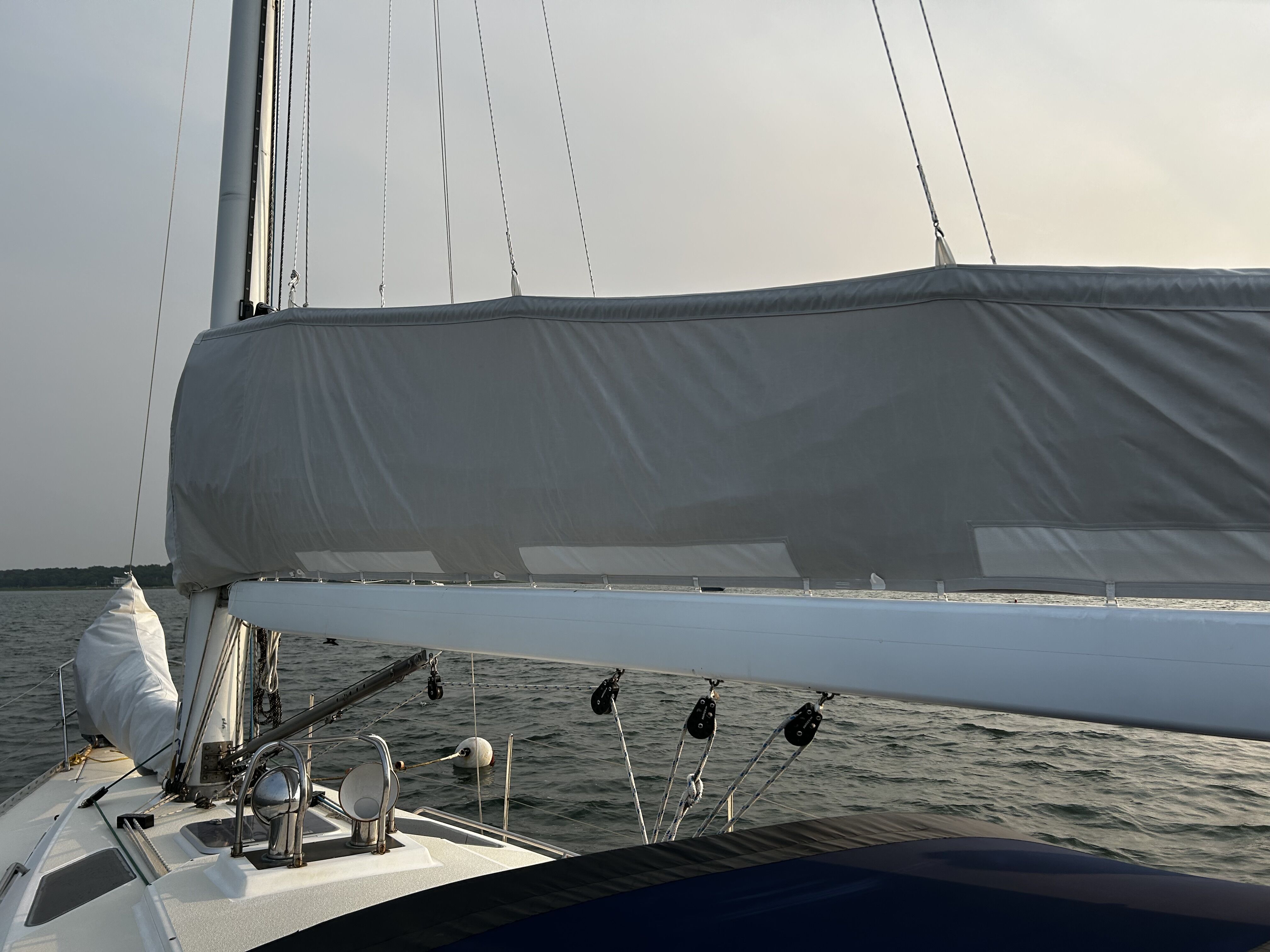
Harding of Mattapoisett. Very pleased with the construction. The last few feet of roach has to be hand doused. Otherwise, a game changer.
I find that if I do what the former owner of the boat calls “The Freedom Drop” it all ffalls into the bag. What that means is I head up to luff and blow the halyard and just let her rip straight down into the bag. It’s down in 2 seconds. I have heard people in other boats yell “WOW!!!” When we do it. If I slowly lower it, the sail flogs and guess what… I have to stuff it.
Freedom Drop for the win.
1 Like
I have a pack made by Endevour on my Mull 28, along with a Tides Marine Strong Track. The combination is excellent! I also added a boomkicker to help support the boom as the lazy jacks holding the pack provide less boom support than the original lazy jack rigging. The zipper has an extra long ribbon attached making it easy to get leverage and pull. The only caveat is when the pack is closed, the zipper is over the reef lines coming out from the back of the boom. When I want to raise the sail, I totally unzip the pack and rezip the last couple of inches below the reefing lines. The Tides track makes dropping the sail quick. The pack has battens so it holds its shape well. They did the original rigging. The pack battens are sewn in, so I pull the pack off when storing the boat for the winter and store it below. Getting the first batten past the lazy jacks is a little easier with the pack than before as the lazy jack angle is slightly different. I still need to be pretty much head to wind for the first 10 feet of getting the sail up. After the first batten is clear, there are no additional issues.
Hello. F45CC. I have an old stack pack from Doyle, its on its last legs and its great when the sail comes down but getting it up is almost always a huge issue with battens getting caught, going under tension on lazy jacks and often coming out of the pocket. I lost one last season, it went straight into the sea. The only thing that I think will work is dropping the lazy jacks on the leeward side and tensioning them again every time i raise the sail, which is a huge pita but I just don’t see any other way. I will take that though over having to flake and cover the main every time i drop it for sure.
1 Like
so you leave the reef lines loose when you drop the sail instead of pulling them in as the sail is dropping/
I always leave my reef lines loose.
Do you tighten the lazy jack lines before dropping the sail? With my current setup with standard reef lines without a stack pack, I push the end of the boom up with a boat hook while my wife tightens the lazy jack lines before dropping the sail. If I do not do this, the boom is too low to put up the dodger and Bimini. How do you do that with the stack pack? If you tighten the lazy jack stack pack lines before dropping the sail, will the bag be open enough to accept the sail into it?
I don’t. I drop the main with the boom off center so it won’t land on my Bimini. I will attach my main halyard to the end of the boom at anchor if I want it centered. Otherwise I keep it to the side and steadied with my preventer.
I always sail with the dodger and Bimini down, particularly when raising and lowering the sails. Unless I have the boom pretty high, it still will not clear the dodger and Bimini off to the side unless I make sure it is very high. I also always have the boom off to the side once I put the dodger and Bimini up. I would think dropping the sail could be a problem if you have significant wind. I have found that unless I am headed directly into the wind, particularly in a stiff breeze, which is most of the time on Lake Ontario, the sail gets caught in the lazy jacks part way down.
I guess I could drop the sail into the bag with the boom low and then raise the boom with the main halyard hooked up to the aft end, but that seems like a big hassle. I could do that with my current setup. With the aft end of the boom low, it would be much easier to put the sail covers on.
I’ve dropped it in 25 knots. It’s down in 1 to 2 seconds.
I know what I need to do and that is send a person to the top of the mast and run a topping lift. I will probably do that this spring when the boat is still at the travel lift dock and ask them to send someone up with their crane.
I think k we both have blown boom vang springs. Yours sounds worse if you don’t clear your dodger. Mine clears that just fine and just barely touches my Bimini.
I clear my dodger when the sail is up with the lazy jacks loose enough that the blocks do not rub on the sail. If I tighten the lazy jacks before dropping the sail, I have no trouble clearing the dodger. But if I do not tighten the lazy jacks before dropping the sail, the heavy weight of the lowered sail on the boom drops the boom too far to clear the dodger and Bimini. If I lower the sail with the lazy jacks loose, when the sail lowered onto the boom it is too heavy to get the boom back up to clear the dodger. Are you suggesting that the released vang should be able to keep the boom higher than the dodger when the sail is on the boom?
My understanding is that a topping lift does not adjust, which I would think might interfere with tightening the vang to get the proper sail twist when the wind picks up. I frequently adjust the vang when sailing to get the proper twist, because where I sail, the wind speed frequently varies considerably. In a stiff wind, with the sail twist properly maintained by tightening the vang, the boom will hit the dodger and at times the Bimini when I come about. That is generally not a problem because I prefer to sail with the dodger and Bimini down. While a topping lift would keep the boom from hitting the dodger and Bimini, wouldn’t a topping lift interfere with tightening the vang in a stiff wind?
from what you are saying, I think your vang needs to be re-tuned. If you pop out the big clevis pin that dictates where the outer tube rests on the spring and lift the boom and insert the pin in the next notch it will want to sit higher. If the boom sits too high then you need to replace the spring or insert a spacer puck in there.
I have seen two different topping lift situations on Pedrick designed freedoms. Theres the stationary topping lift that dead-ends to the mast head and is adjusted by a small block and tackle at the boom end so you can adjust it. Then there’s the way I plan on doing it where the topping lift is really just the back up halyard. You dead-end one end to the end of the boom, go up to the two sheives at the mast head and then down to the deck and back to the cockpit. You could add a jam cleat to the lineup at the jib winch for it or you could use your 1st or 3rd reef cleat. You could also put a block at the mast with a cam cleat attached to it and go up to the masthead after you raise the sail to loosen it and to tighten it before you drop the sail. After experimenting a bit this summer, I confirmed that the 1st reef doesn’t make that much difference and will run it to that cleat.
Thank you. I will save this posting for reference next spring. If what you say is correct, my sailing work may be easier.
You’re welcome. Happy to help. Be sure to tune the vang with your sail and battens on it so the proper weigh load is distributed.
Thank you. Will keep this in mind
Another option, although it is a cost, is to install a boomkicker to support the boom. As I mentioned above, I have done this with great success. Boomkicker does provide a fitting for Freedom masts. It doesn’t act as a vang; one still needs to use the vang line with the boomkicker, but it does keep the boom supported regardless of lazy jack setting without adding a topping lift.
This is interesting. I had never heard of this previously. Thank you.
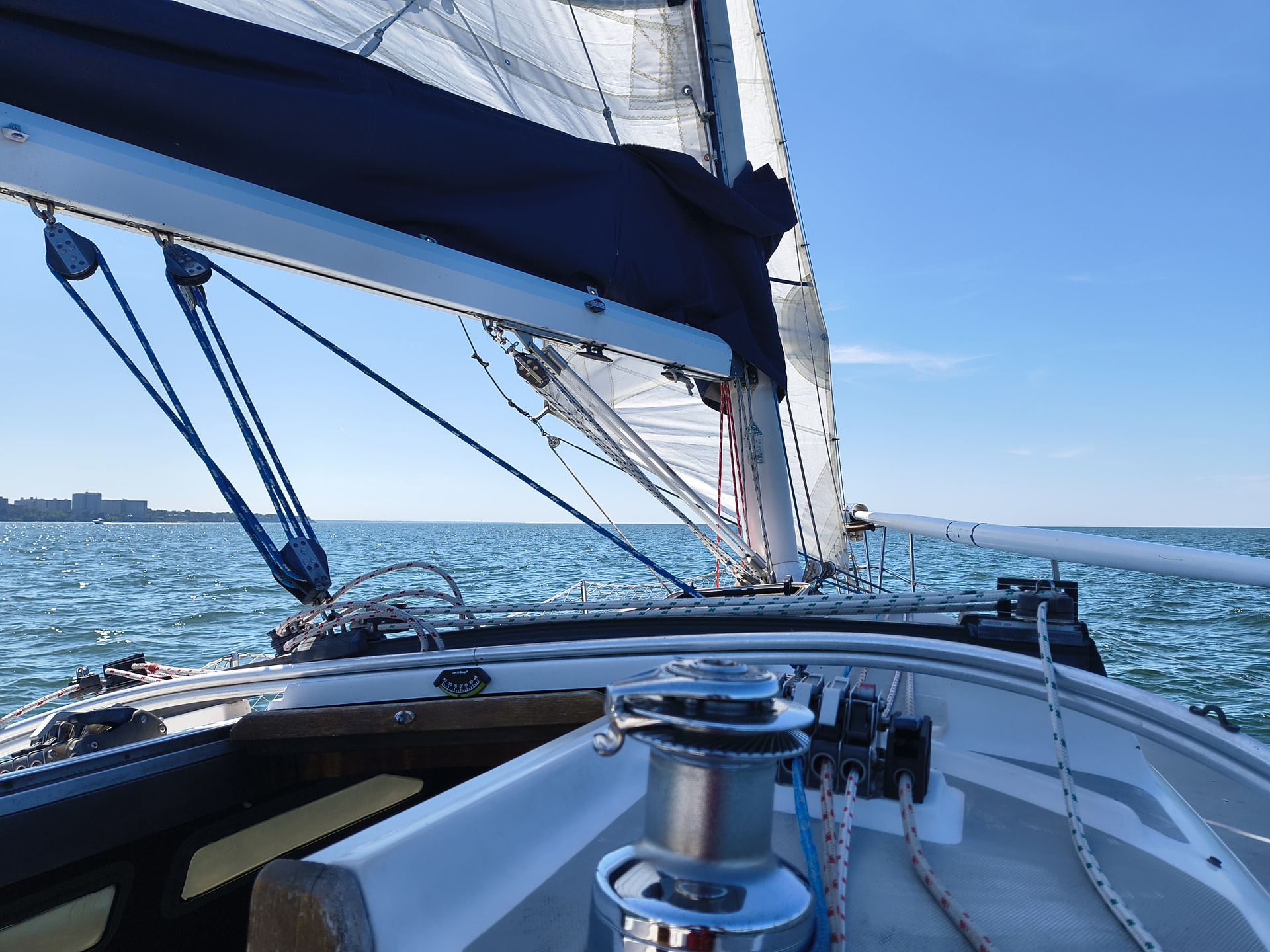
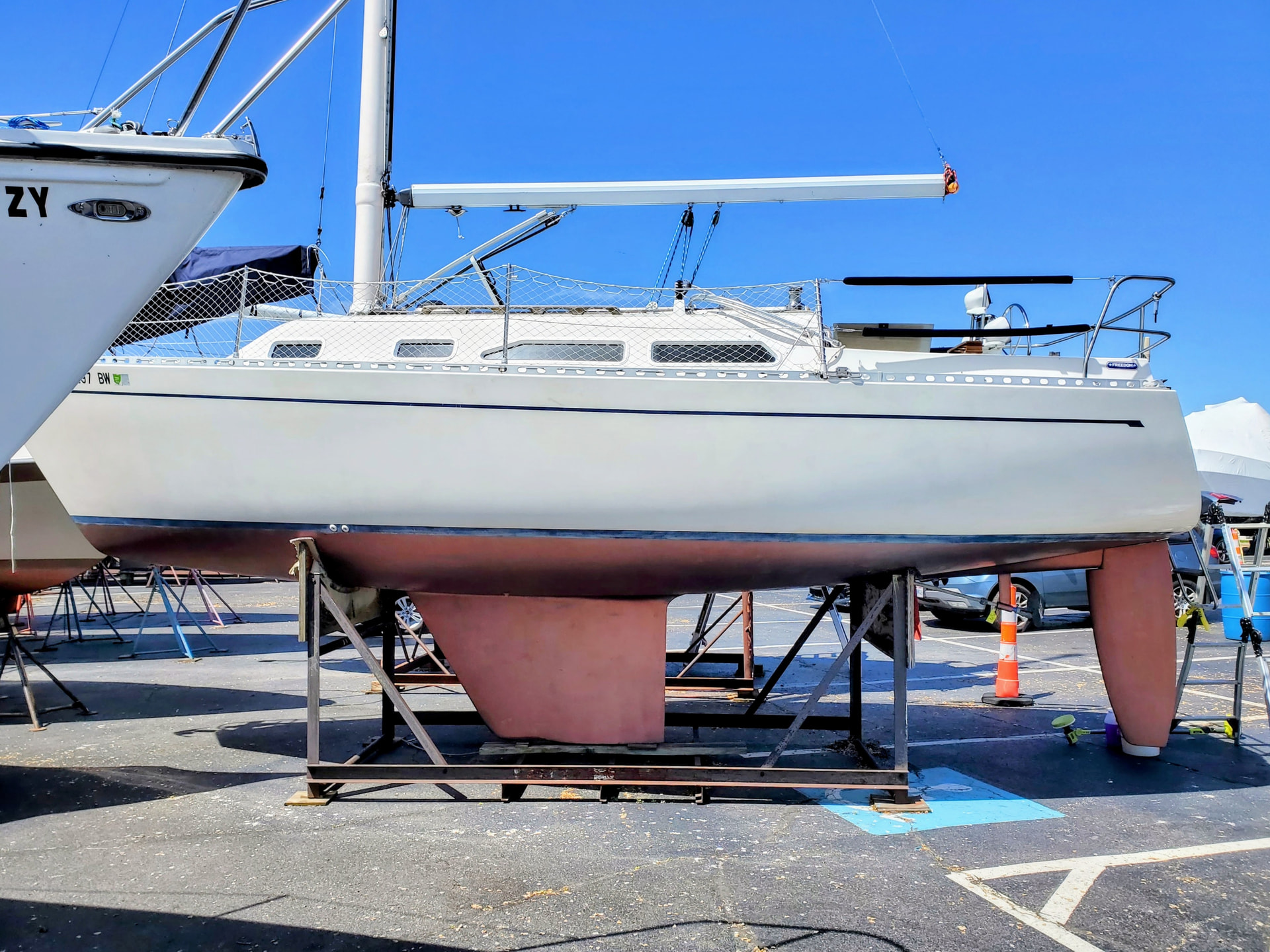
Thanks for sending this
The boom on a 40/40 with the sail on it must weigh 5x what a freedom 28’s boom weighs. The vang on the 40/40 is designed to support that weight when properly tuned. The boom kicker is for smaller boats with lighter loads and block and tackle vangs. Just my 10¢