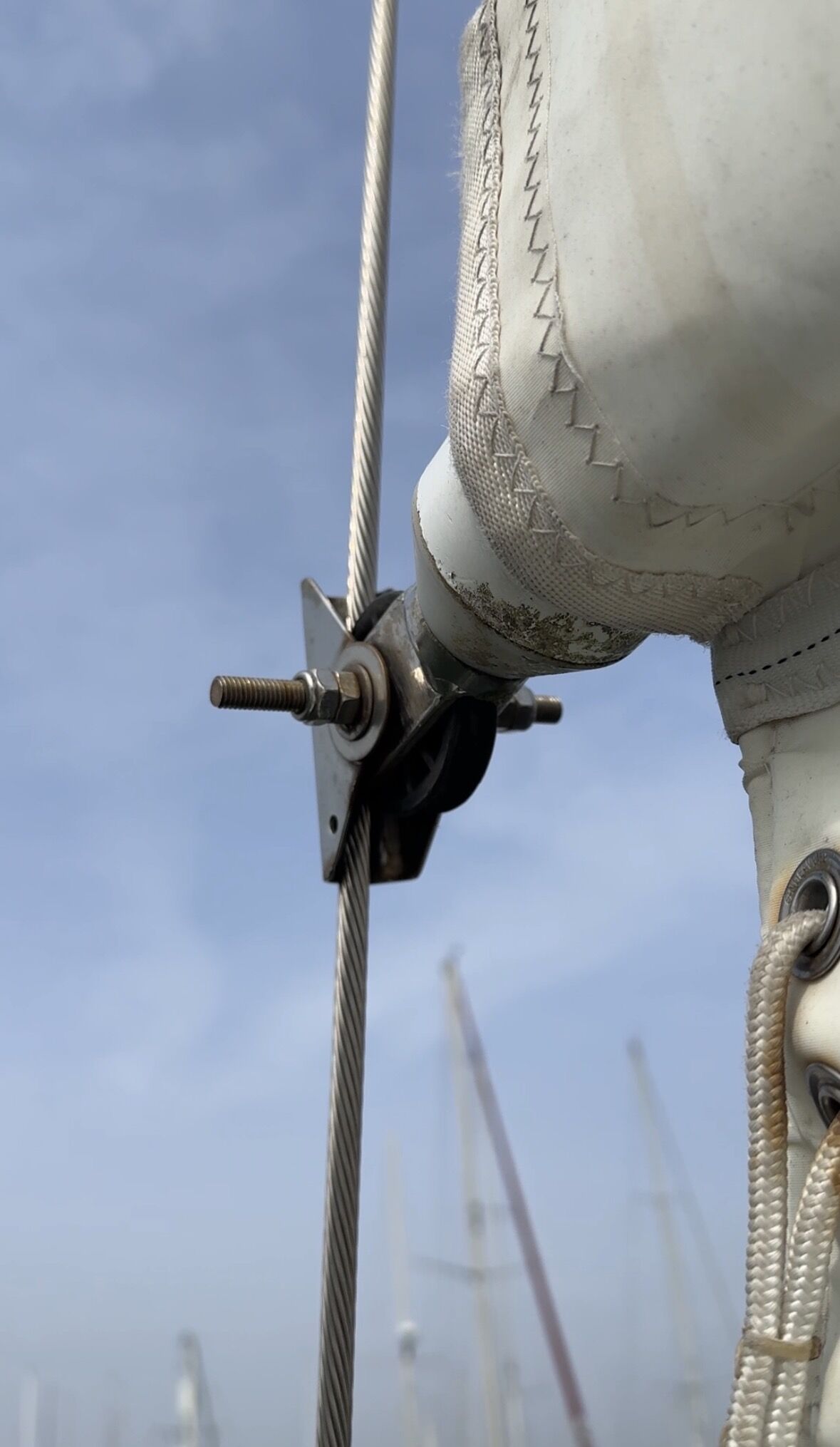
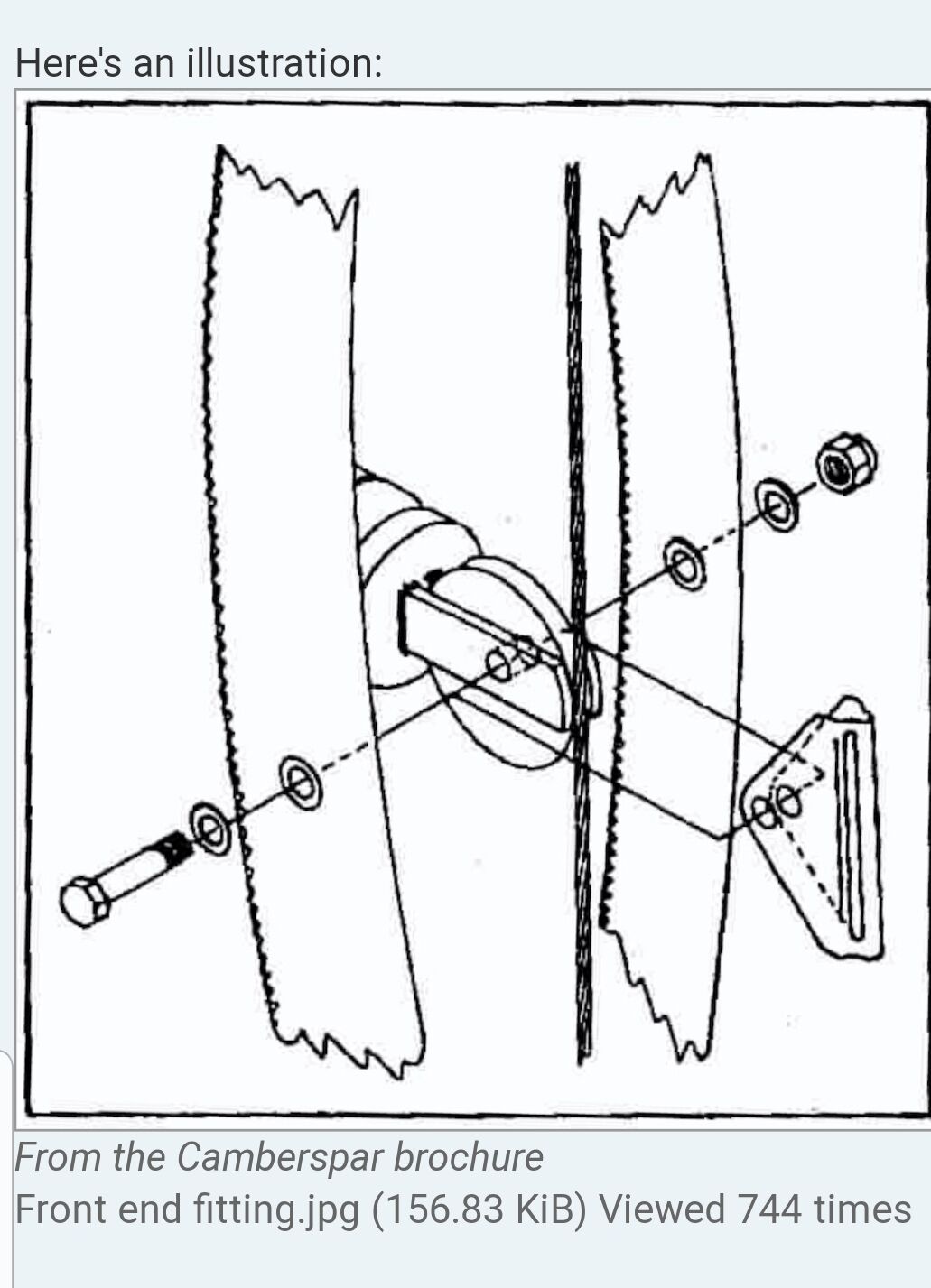
This is first year owning out Freedom 40/40 and our riggers have just put the sail on the Camber Spar. The issue we have when raising the jib is that the wheel that runs at the end of the spar on the forestay twists and becomes difficult to pull up. I found a PDF of how it should connect but wasn’t sure on one thing.
Should the bolt that runs through the wheel on the forestay also, run through the sail? The iamge below is how we have it at the moment, but I’m wondering is the sail also, needs to be attached on that as well. Any help or photos of other setups would be much appreciated
also, you see that little hole on the bottom left of the retainer clip? find some small dyneema line, put it through that, make it long enough so that you can raise the sail, and fix the other end to tack fitting or the pulpit or something so that when you’re working on all this you don’t drop the retainer overboard.
That threaded rod going through the hub looks problematic to me.
Firstly, you shouldn’t have threads inside a hub as the threads will slowly chafe away at the hub and wear it out.
Lastly, the threaded rod looks dangerous to me as you could very easily nick yourself on it. I would shorten it, or at the very least, cap both ends with acorn nuts.
Many 40/40’s have been converted to roller furling, as it makes life a lot easier.
Yes, what others are saying is correct that the bolt goes through the sail grommets, bracket holes, and the pulley hole with the washers on the outside of the each side of the grommets.
The bigger problem is connecting both ends of the camperspar to the jib pocket. Many people get frustrated with this. I have a Freedom 40/40 also for 18 years. It took me a while to figure it out.
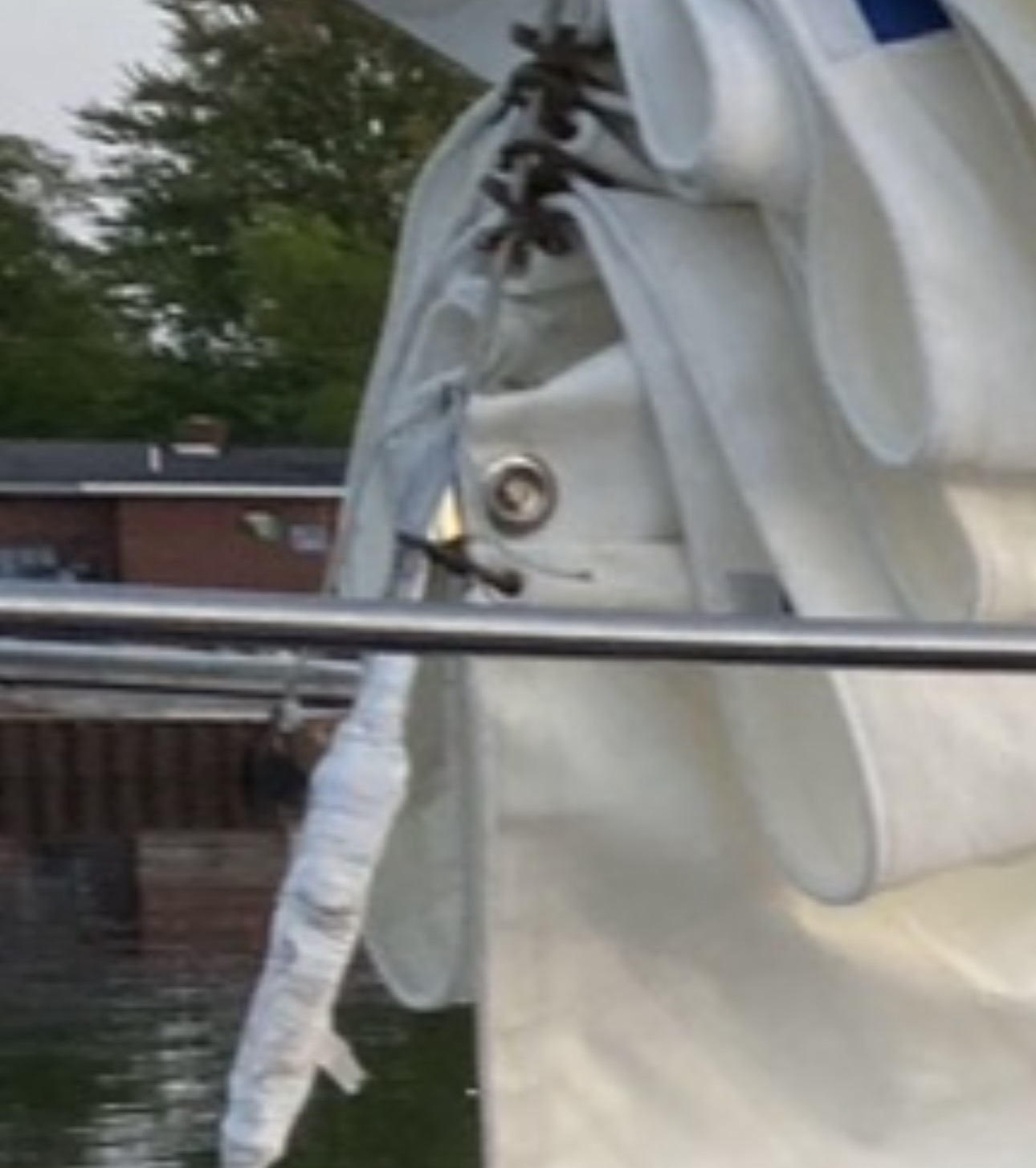
The way I do it, I attach the camperspar to the sail and the fore stay first. I then take some strong quarter inch rope, thread it through the grommet on the mast side of the camperspar pocket, around the back of the mast, then through the grommet on the other side of the sail and tie it as tight as I can. Then I slowly raise the jib which will cause the quarter inch rope to tighten and pull the mast end of the sail aft, allowing me to easily slip the camberspar points into the grommets.
I have heard of some people getting so frustrated that they cut the camberspar so it’s shorter, which may not going to be good for sail shape
I also keep a couple of extra metal brackets and bolts that hold the sail to the forestsay because they don’t swim very well. Also, as someone else said, tie a piece of twine through the bracket holes and around the forestay in case you drop the bracket.
Thank you so much. With a bit of strength the rigger and I got it on yesterday and it’s looking much better now. With the metal bracket, do you find what the job is down, it has a slight twist on the forestay, as in it’s not perfectly straight to it?
You are absolutely correct - your professional riggers should have known better.
The securing bolt MUST pass through the eyes in the jib pocket. This is essential, as you have deduced, since the sail then becomes an integral part of the camberspar system and initiates the “turn” when you tack.
On my F32 (Mull) I use large “penny washers” on either side of the sail eyes in order to help protect the sail from abrasion - these washers are larger than the ones shown. I would recommend changing your current bolt arrangement over to a ‘drop nose’ pin of suitable length and diameter - it will simplify installation and removal and reduce the number of small parts you have to handle.
When fixing the camberspar, start at the forestay - get everything secured - and only then turn your attention to the hooks at the aft end. I find it beneficial at that stage to twist the camberspar so that the curve is towards the top of the pocket - you may need the assistance of a crew member - an extra pair of hands is (nearly) always welcome.
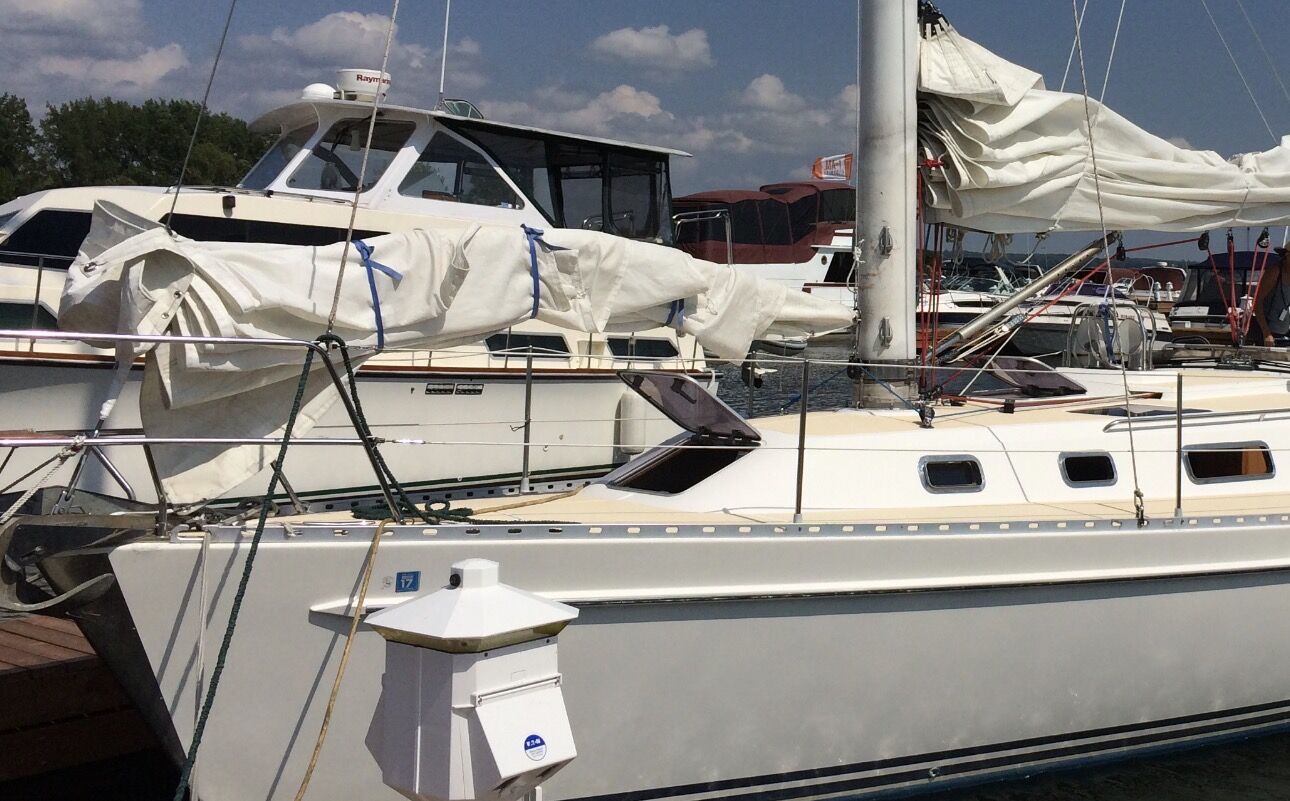
when the jib is down and lashed to the camberspar, I keep the jib sheet tight so that the camberspar is curved upward. This keeps the pulley fairly straight on the fore stay.
Thanks for the tip It’s not super easy, but a CamberSpar with a vertically aligned arch is significantly easier to attach/detach as the sail is being tensioned less.