Hi everyone! I’d like to get your thoughts on our rudder.
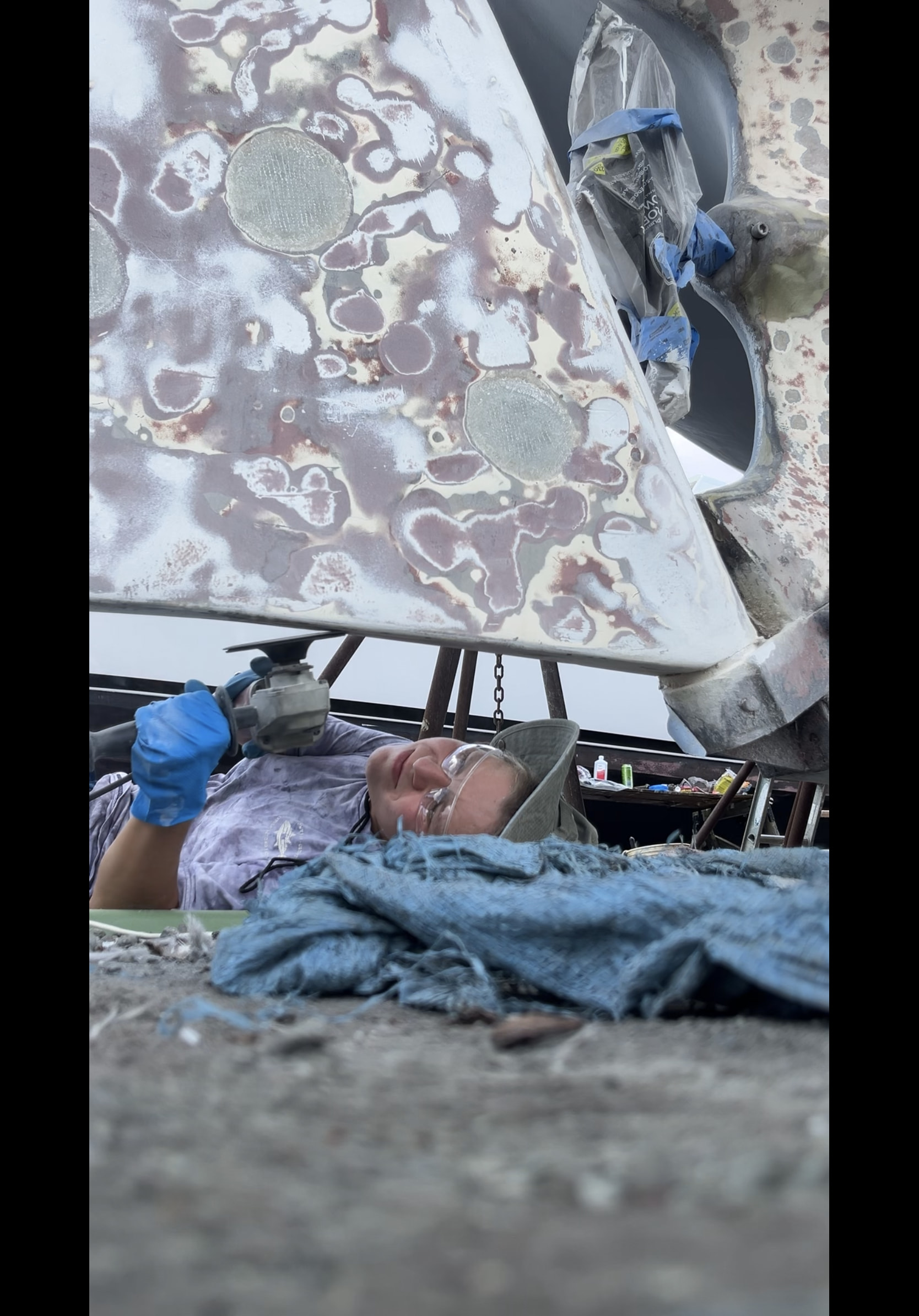
When we bought the boat, the rudder had quite a few blisters, just like the rest of the hull. We repaired everything below the waterline properly: opened every blister, repaired the deeper ones with fiberglass and epoxy filler, then applied epoxy, barrier coat, and antifouling.
One of the deeper blisters allowed me to see a little of what’s inside the rudder. The core looked like some kind of foam, definitely not balsa.
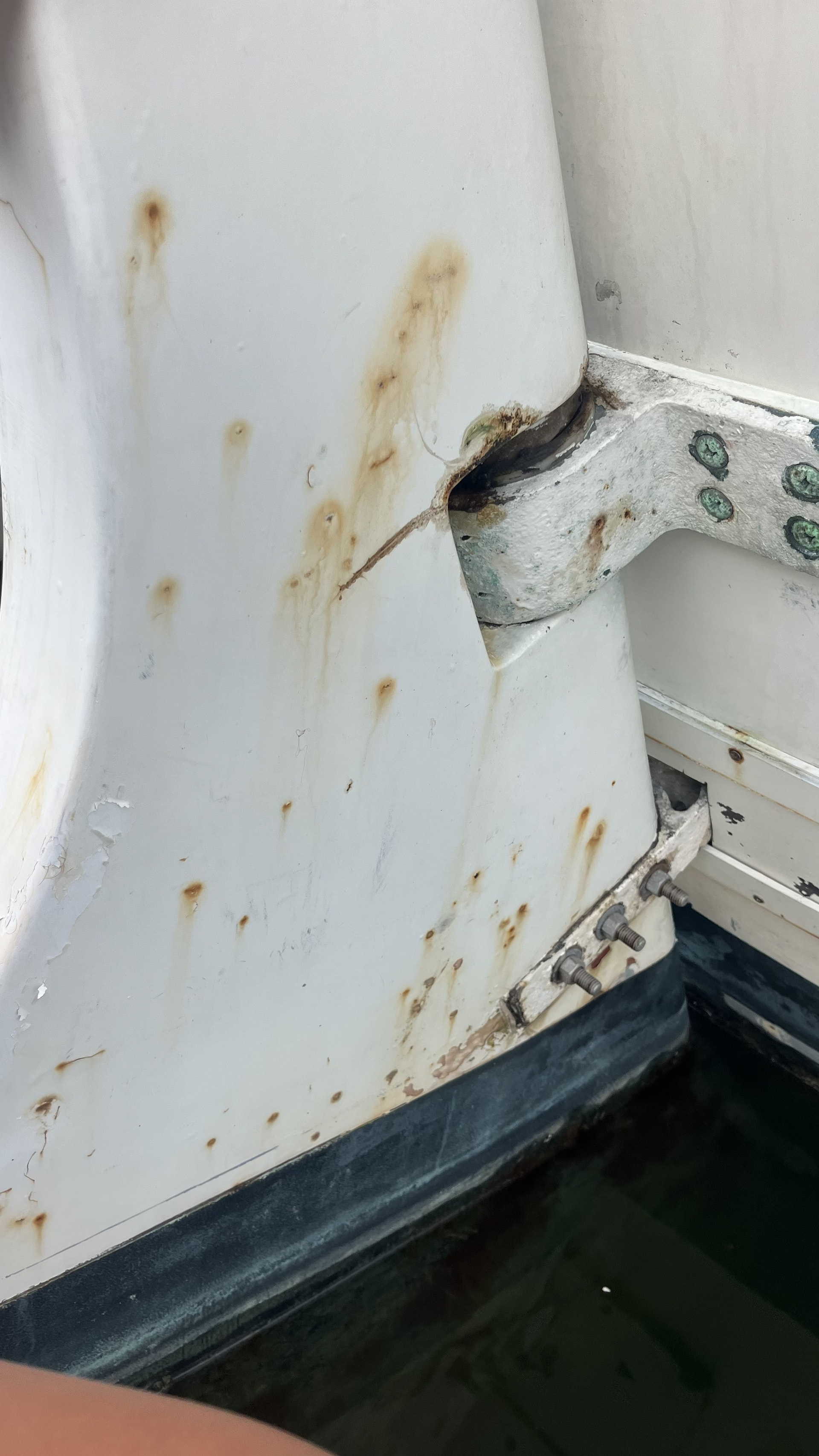
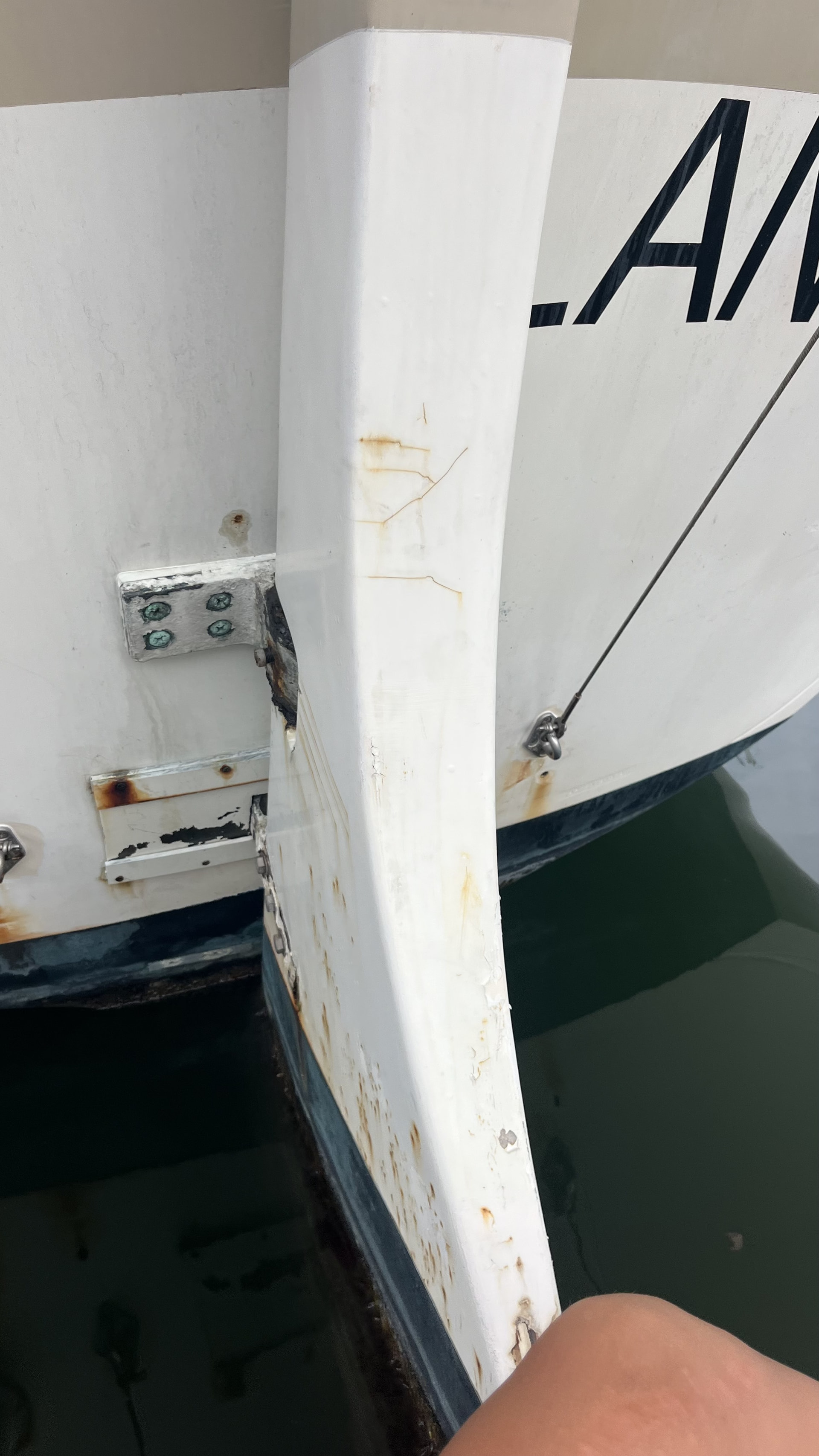
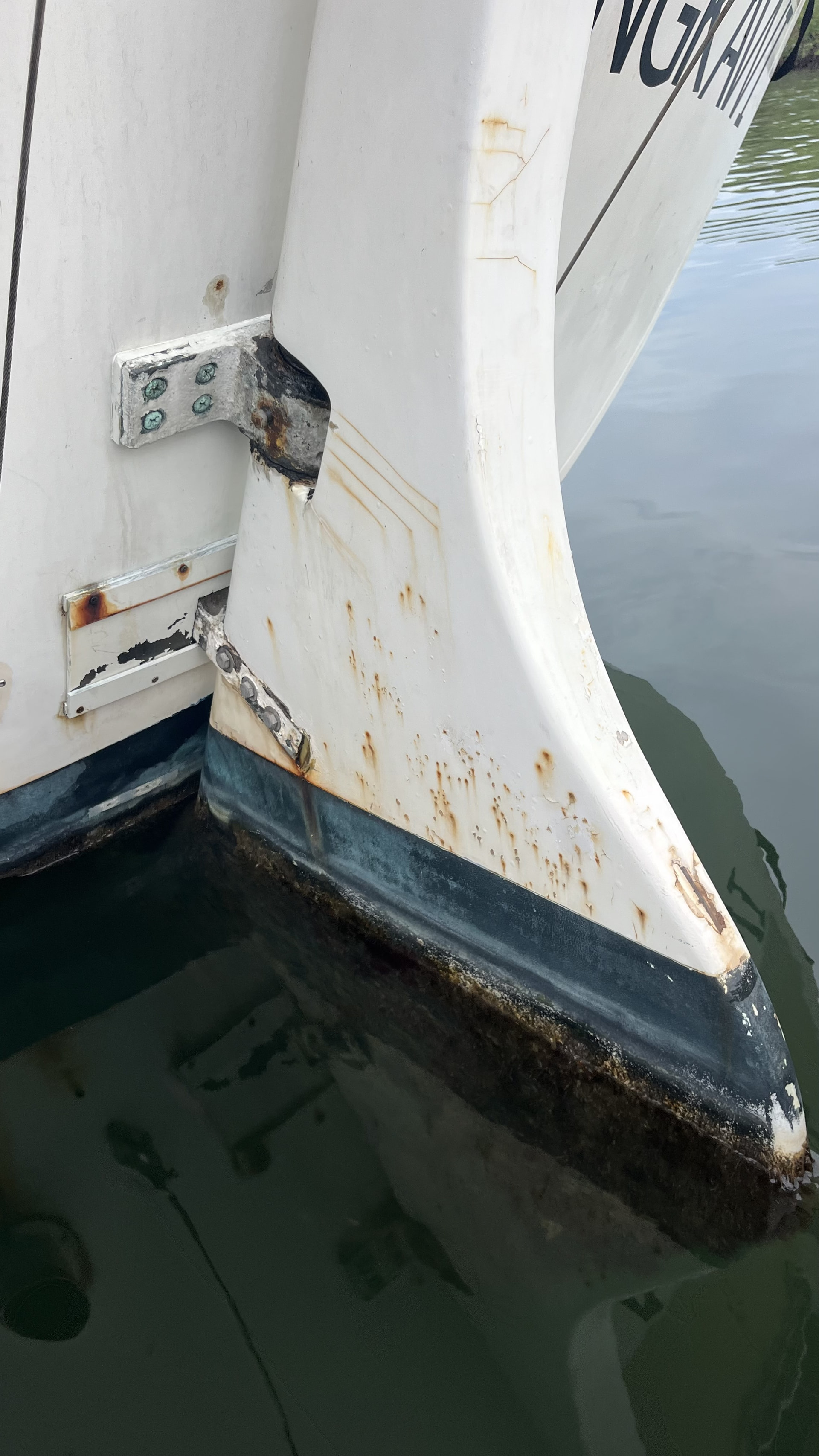
We’ve now been back in the water for over a year, and quite a few small blisters have appeared above the waterline as well. We pressed a few of them, and some rusty-looking liquid/staining came out, as you can see in the photos.
After our last passage, we also noticed several small longitudinal cracks in the rudder. They don’t look severe, and the rudder has been working normally, but we’re wondering why the cracks have formed in this particular direction and what you think we should do about them at this stage.
There’s also something else I’m curious about. As you can see in the photos, there is a ring attached near the top of the rudder, and while sailing a line runs from the wishbone boom to this ring. I assume this is a custom modification.
Interestingly, it actually seems to help the rudder a little, almost like a very gentle wind-vane steering effect. We quite liked it. But I’m also thinking maybe water could be entering the rudder through this attachment point.
What do you think about the condition of the rudder in general, the cracks and rusty-looking drainage, and this wishbone-to-rudder setup? Has anyone seen or used something similar on another Freedom?
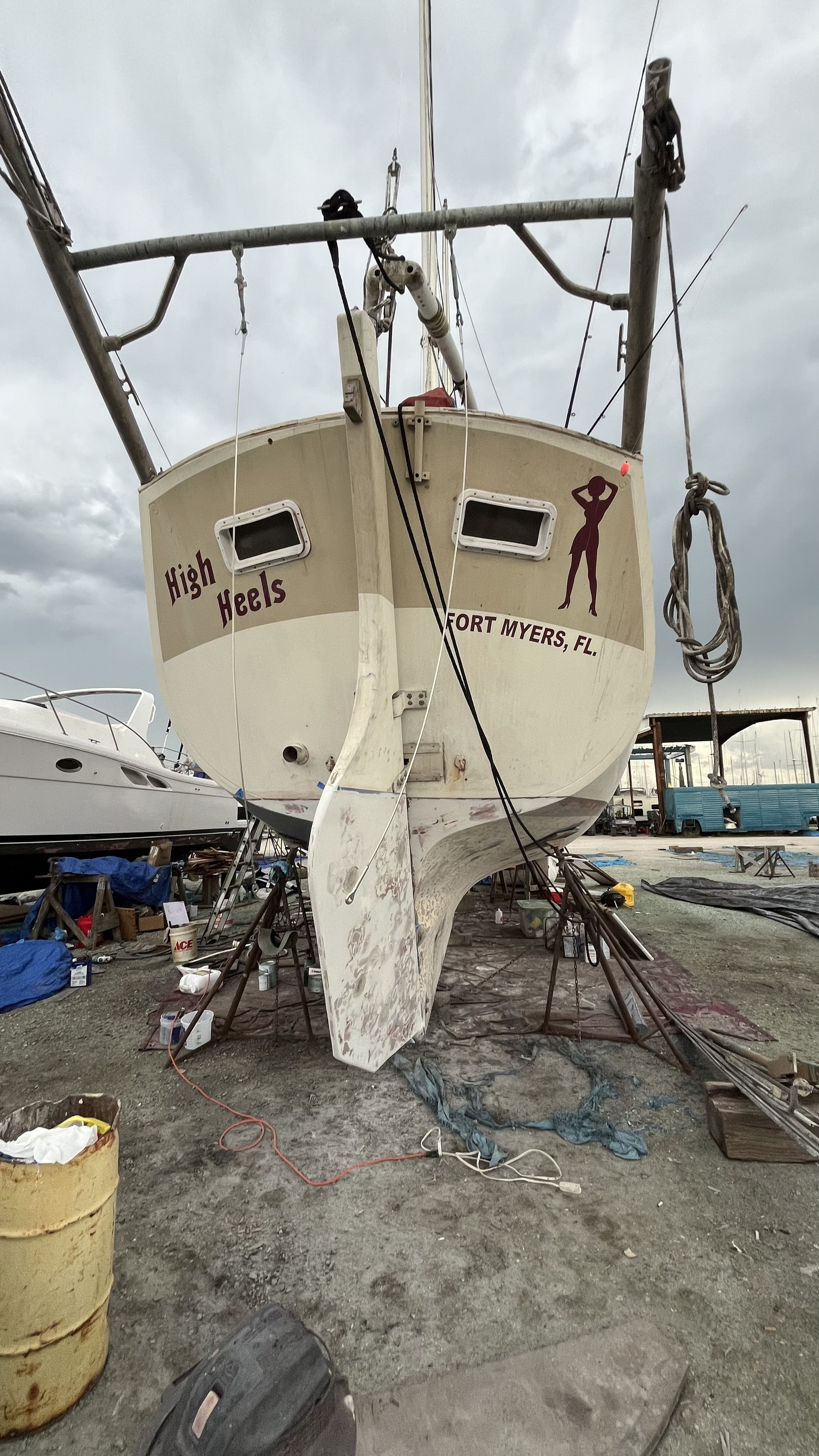
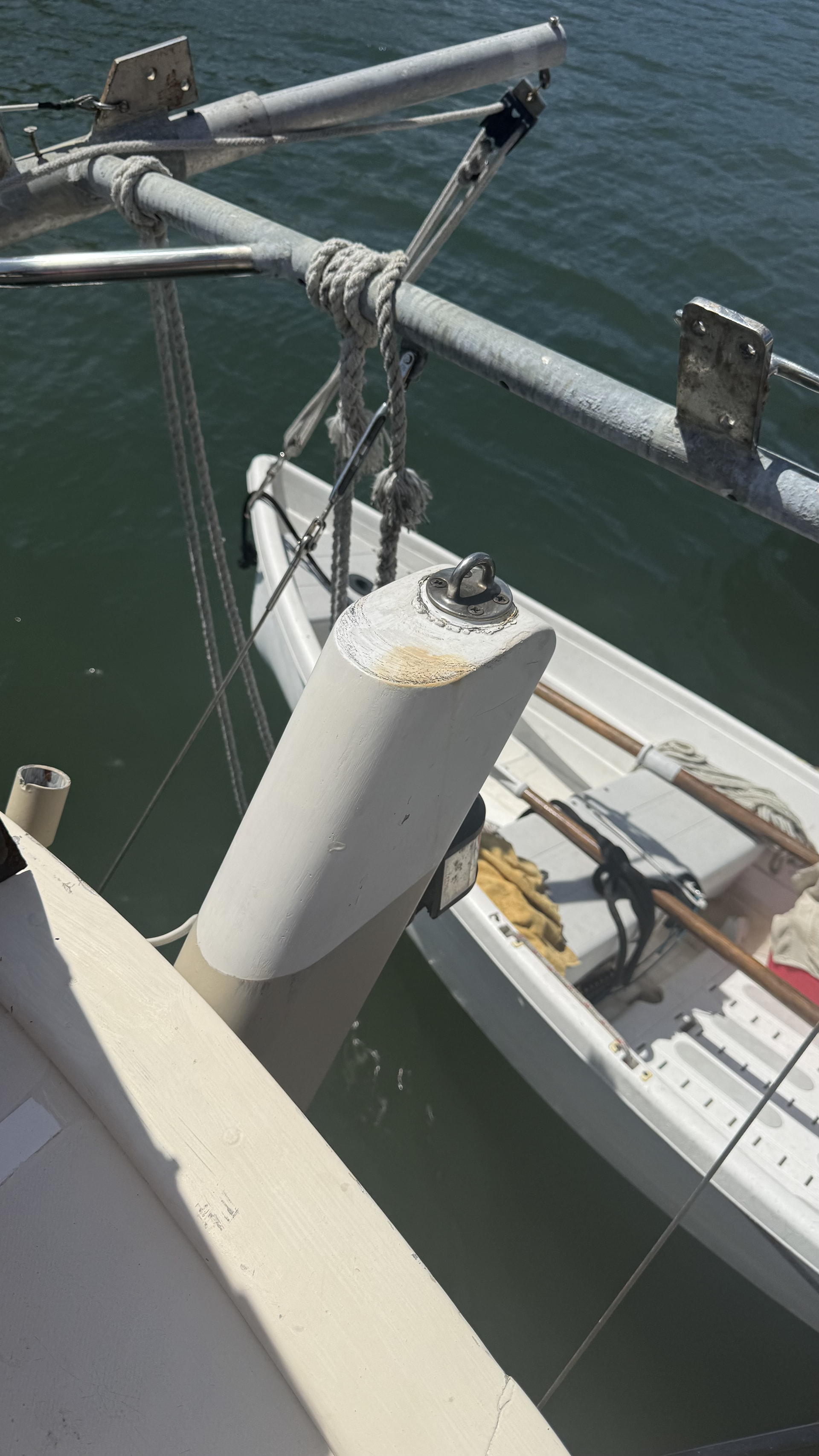
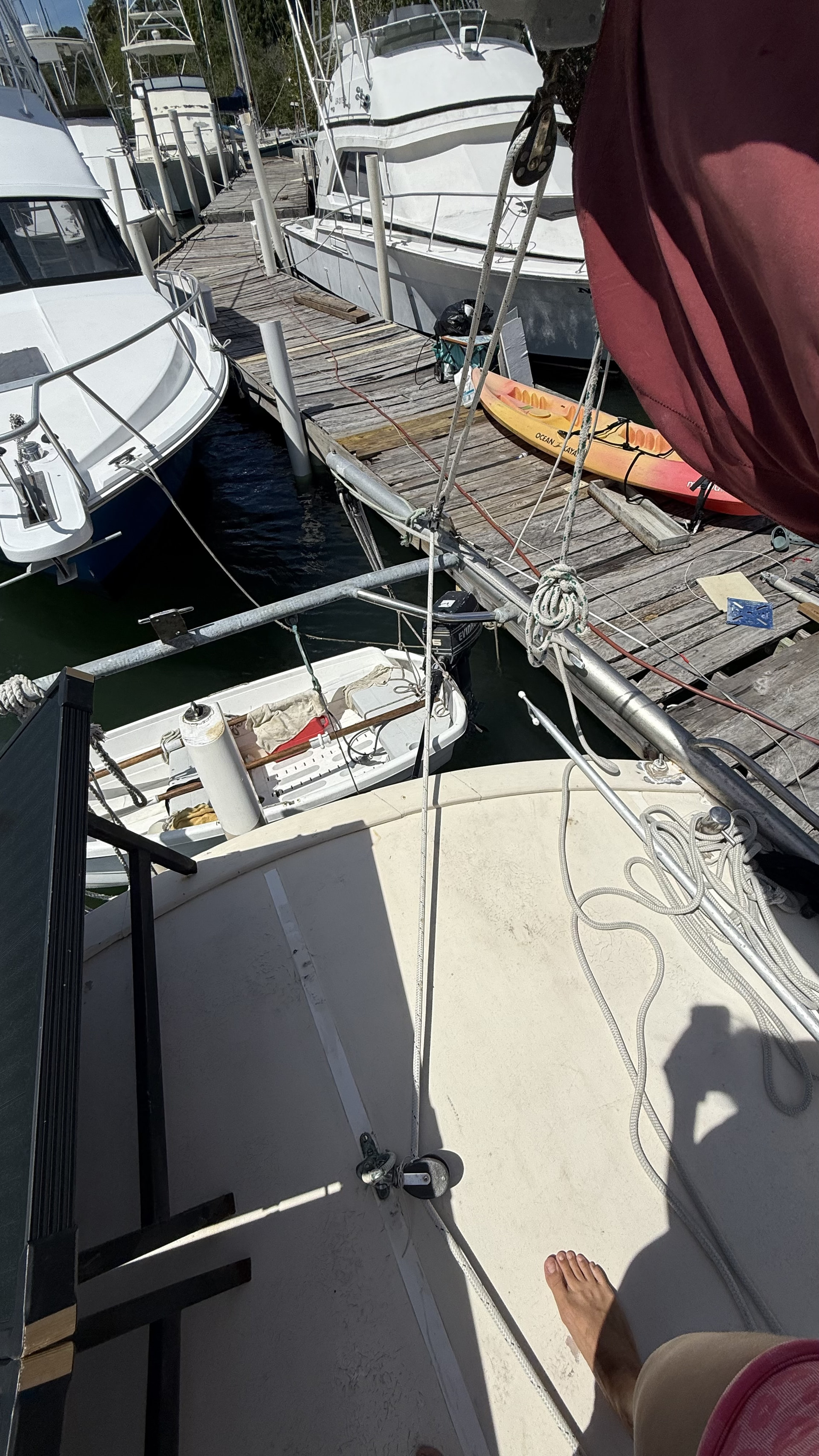
My guess would be that pad eye on the top was added to make it easier to lift the rudder when removing it. Just a guess, though.
I don’t know much about the F40, but the Mull boats were made with carbon composite rudder stocks, rather than the traditional stainless steel stock with steel flags welded to it. If yours is built this way, you don’t have to worry about water ingress, as there’s nothing inside the rudder to rust. Fiberglass and carbon fiber are perfectly happy being waterlogged. If your rudder has a regular stainless stock, you should think about maybe opening it up and inspecting it for corrosion. It would also explain the rusty spots on the outside. I’d figure out what’s inside your rudder first, ideally non-destructively—a magnet might work, or even a metal detector. If you don’t get a ping, you don’t have anything to worry about.
Hi Anna, I was Chief Engineer at TPI when Freedom 40s were being built there, 1980-81. The foam in the rudder is polyurethane foam, 2.0 lb/cu.ft. density, fairly typical of the era. The rudder stock and armature inside the rudder are welded stainless steel, and if there is any corrosion inside, it is likely not too bad as oxygen, necessary for corrosion, has a hard time getting far into the rudder. Any water ingress is more likely to have come from the lower pintle/gudgeon than the top padeye. The cracks look to be mostly typical gelcoat cracks due to aging, but the cracking at the corners of the pitle/gudgeon recesses look more like stress cracks. It might be worthwhile to grand these back some until they disappear and then laminate more glass cloth or woven roving or biaxial braided fabrics over those ground out areas using WEST epoxy resin to seal them back up again.
The rusty brown liquid coming out of the blisters above the WL is unused catalyst from the original construction. It is OK to open them all and patch them over with epoxy putty, e.g. using WEST epoxy materials.
I hope that helps. If you have any other more detailed questions, you can email me at eric@ericwsponberg.com. Also, you can contact Paul Dennis at Warren River Boatworks in Warren, RI, for additional advice. paul used to be Productiion Manager at TPI for a lot longer than I was there, and he knows all there is to know about all Freedom Yachts. Link: https://www.warrenriverboatworks.com/.
Good luck,
Cheers, Eric
Eric W. Sponberg
Naval Architect (retired)
I have a F33 sloop(uk) and whilst the rudder is different the problem was the same. I was told it was very common for rudders to be foam filled and then to fill with water. It was recommended to open it, remove the foam and then solid fill it. that was done, no more water filled rudder.