Hey guys! I live on a freedom 30 and the condensation on the inside of the hull every winter ends up as pools of sitting water in the storage behind and under the setees in the main cabin. Has anyone installed drain holes/hoses to route it into the bilge or figured out a better solution? I would appreciate any and all advice
1 Like
Hey Erp. Any idea where the water is coming from? I had a similar situation on my f32. The compartment in the head bellow the sink, with no drain to the bilge, was collecting a little water. I found water was dripping through the hardware on the toe rail. The problem was solved after rebedding the toe rail with new hardware.
The winter condensation issue sounds like a challenge. Confess I cannot imagine winter life on a boat. I can barely stay aboard for an hour in winter before my toes go numb.
Lately, I have been reading the British “Practical Boat Owner” site. Very DIY focused. Anyway this is an interesting take on the condensation problem:
2 Likes
Bear with me on this, I will get to the point, eventually  .
.
This is a timely post for me. I do not live on my Mull 30, I live about 40 feet away from it. We have had two months of Tule fog in the California Delta which is a dreary, dank, soul crushing sort of weather. It is cold, wet and turns everything green…not a nice green, a cold, ugly miserable green.
I was down to the boat the other day and saw wetness in a few areas around the periphery of my main cabin sole. I suspected leakage from stanchion bases or toe rail bolts but when I ran my hand along the interior of the hull I felt some moisture. I suspect condensation was causing it. I have not seen this before but this weather…OMG, anything would sweat in this miserable stuff.
I realize this is not a solution but be assured, you are not alone.
Anyway, with regard to getting rid of the water. Fortunately I do not have your “quantity” problem. If I did it would be a problem due to the non existent clearance between the base of the sole and the base of the spaces below the settee ( I am hull #3 may be different on later boats) Otherwise limber holes would be the solution. I have them forward to drain water from the anchor locker through two additional bulkheads and into the bilge. These very rarely see water unless I am fussing with transducer removal/cleaning under the fwd v berth or I get a gusher through the hawsepipe witch is very rare. I dry my anchor rode on deck before I stow it. I also have them aft to get water from the transom under the diesel tank and into the shaft well where it can be pumped.
And this brings me to a possible solution for you. A “zero water” pump which can get a space almost dry and can be activated on/off in short or very long intervals once or multiple times per day. I built one for my boat. It was cheap, uses little power, not much space and works great. Plus it can be used with portable silicone tubing to pump the bilge (or any other space) almost completely dry.
It is 10PM right now but I will take some pictures tomorrow and share the design with you. If you can not manage limber holes this might work but it will require you to centralize the water to some extent, that is, create conditions where the water is collected in a more or less central area so its pumpable. You would also need to protect the wood bulkheads below the settees which contain the water so bulkhead base does not rot. An epoxy coat along the base will do it.
The other, obvious ,solution is a dehumidifier, but they tend to be big, loud, awkward, heavy and power hungry. I had one long ago …it did not fit well in a 30.
2 Likes
Ok, this is my dry pump set up.
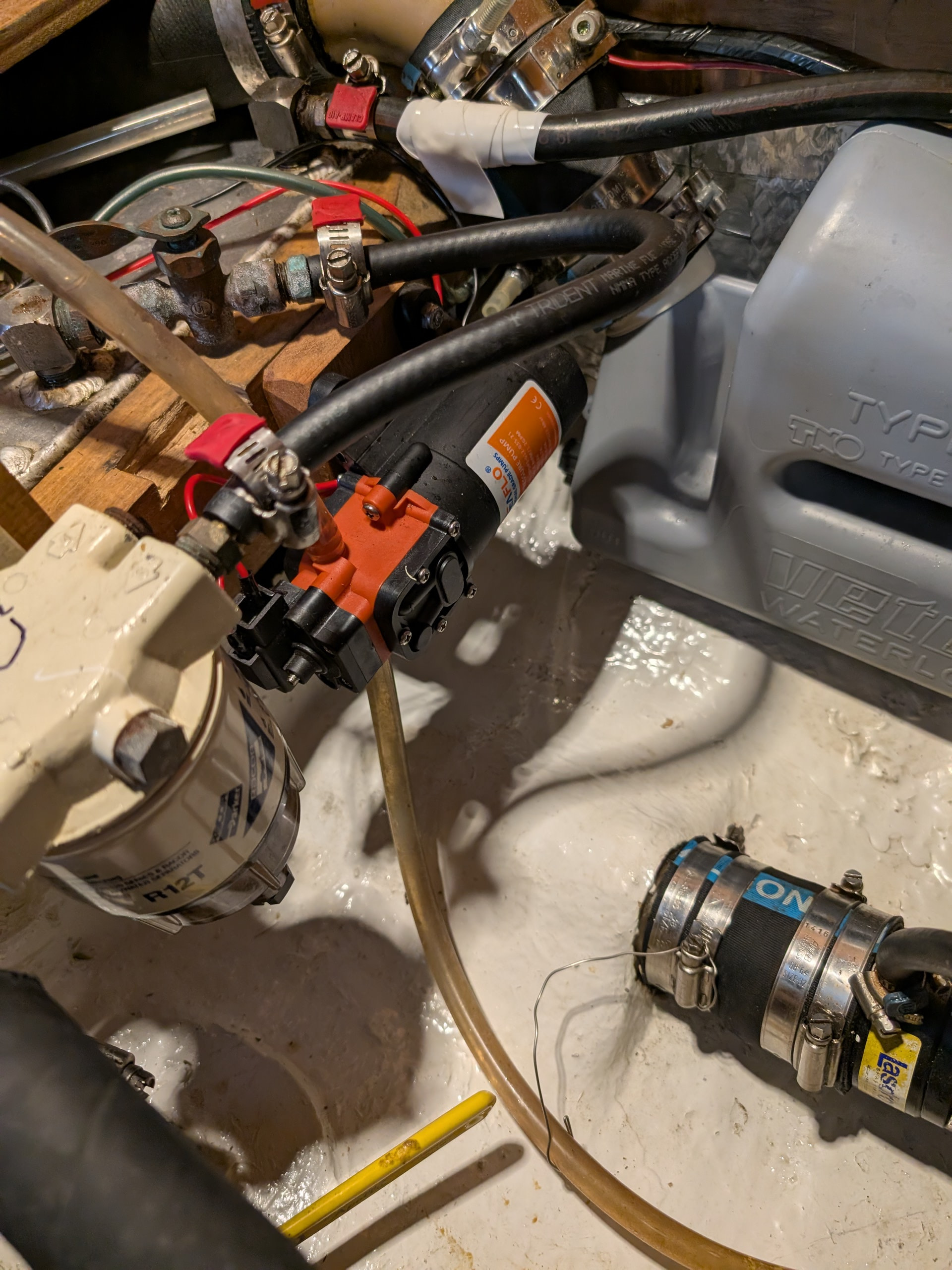
The first pic shows the jabsco pump installed in the shaft well area. The output goes to a 3gal container in the aft cabin (which I use for storage) but any small container could be used in a variety of locations.
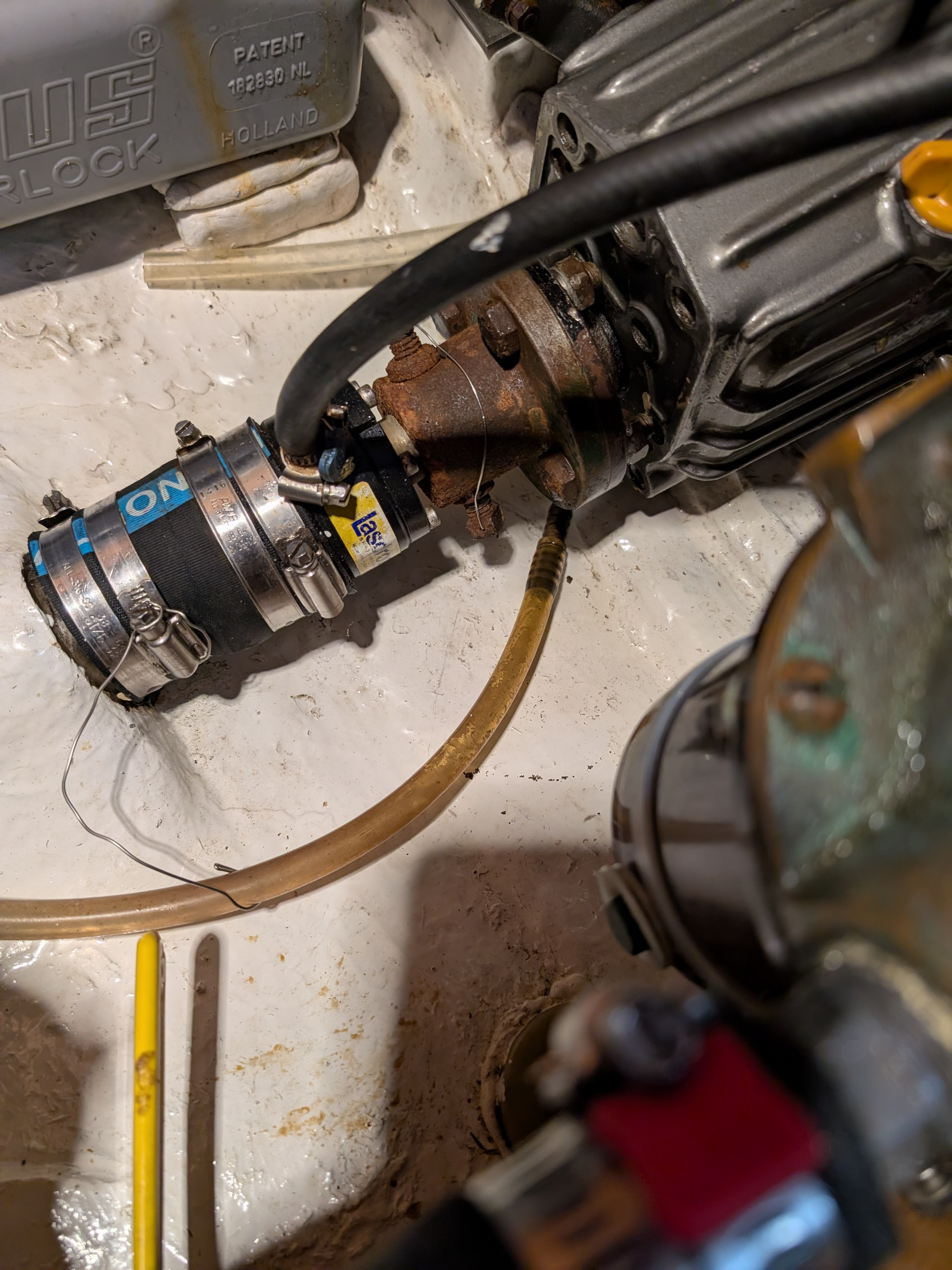
This next pic shows the pickup tube (all tubing is silicone) I have a brass barb joint in the end to give it weight and a bit of seizing wire to hold it in the lowest point of the shaft well. In my case I use the pump to clear dripping from the shaft seal.
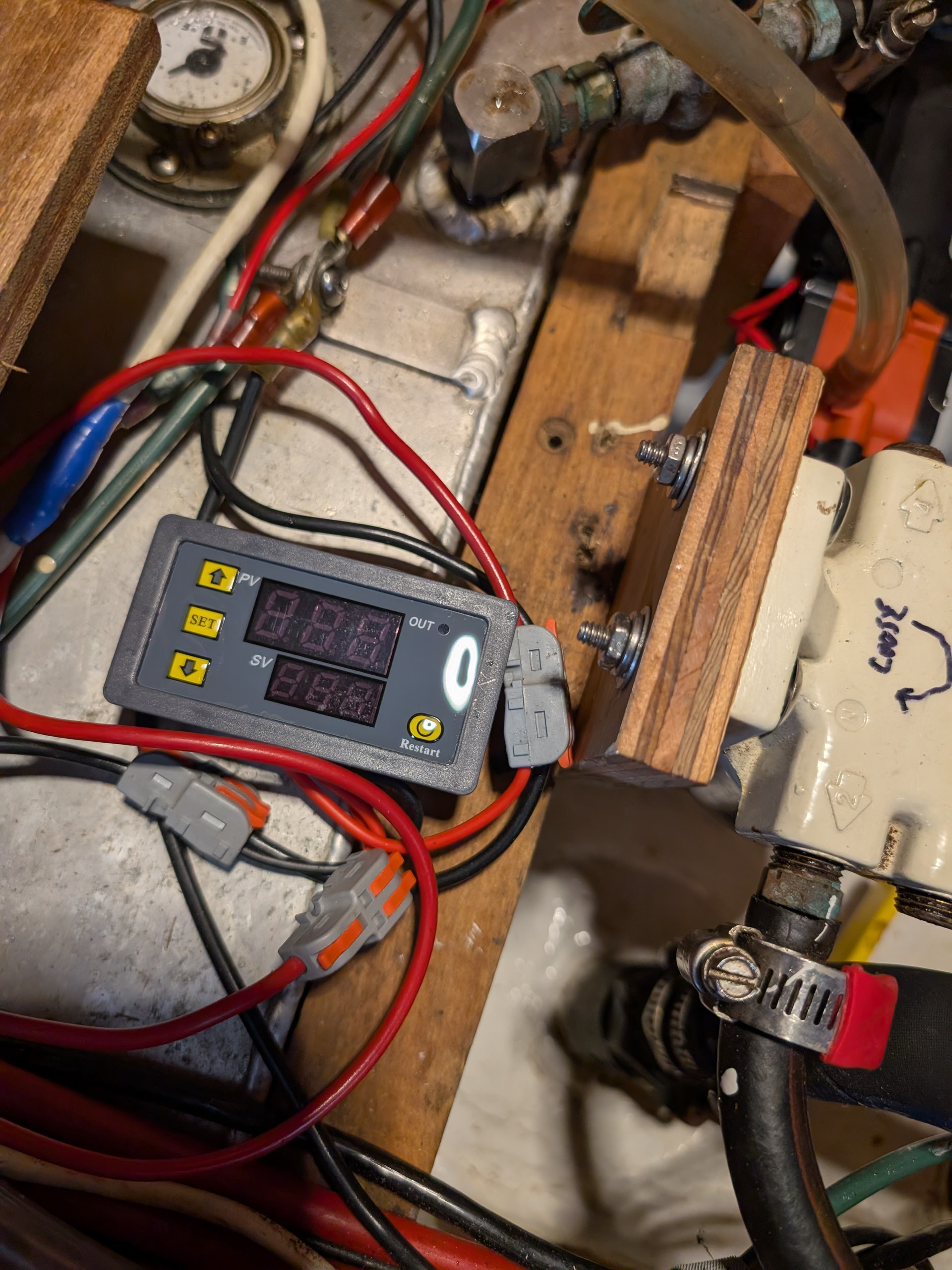
The third pic shows my el cheapo but very reliable on off switch. I can set it to come on every xx seconds and to stay on for xx seconds then turn off for another cycle.
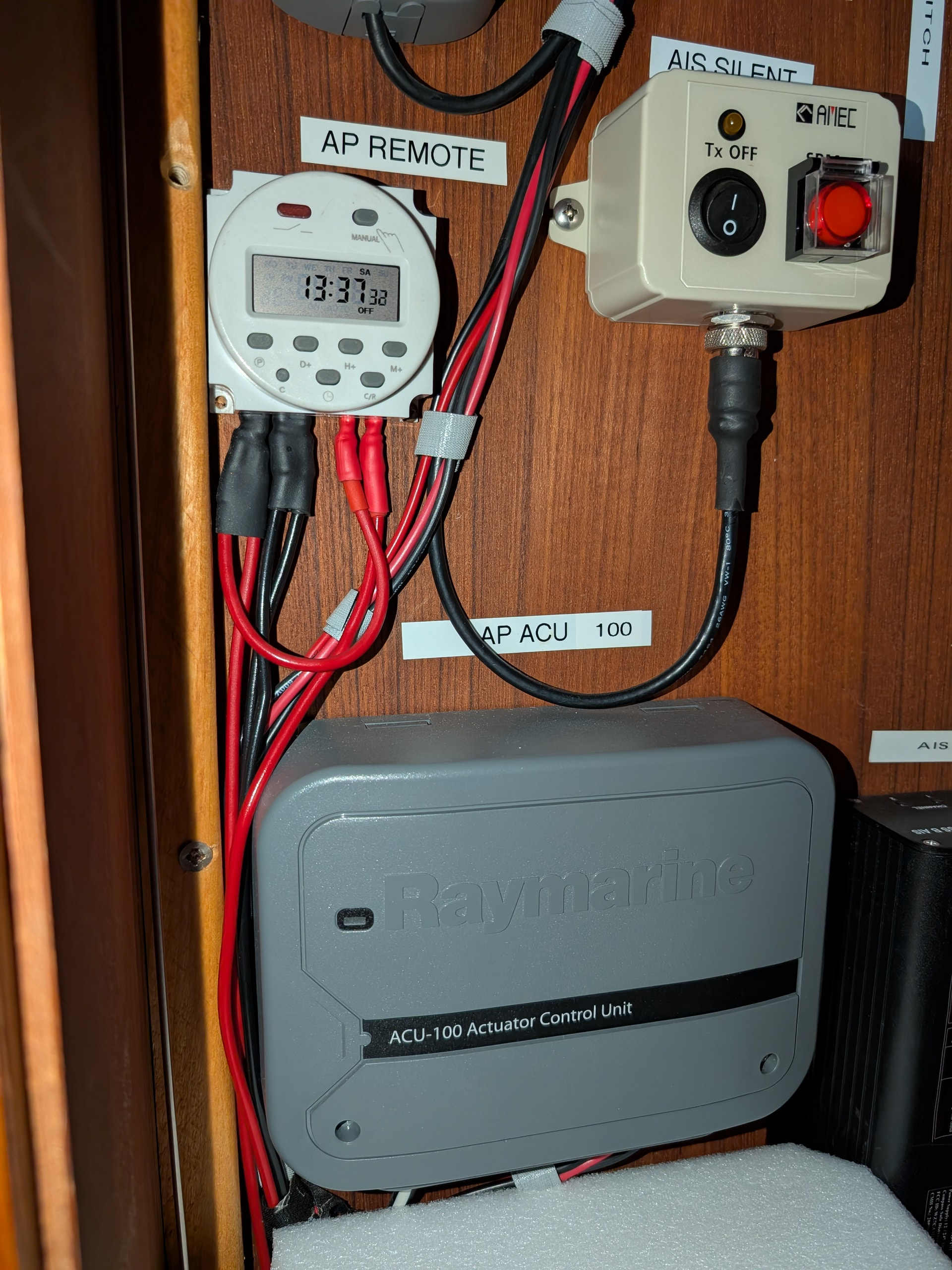
The final pic shows my long term timer. I usually turn this on continuous duty underway. While the cycle timer takes over for shorter intervals of pump activation. When at anchor or dock I can set this to turn the pump on once an hour up to once a week. I do get a little shaft leakage when I stop the boat. It eventually stops leaking after a couple of days so I use this to clear that little bit and then deactivate it completely.
So this works really well and I can hook a silicone tube (which is routed from shaft well under the engine to the bilge) to the pickup barb to clear the last bit of water out of the main bilge whenrver I want to. It is really handy as opposed to sponge drying the bilge…I am fanatic about keeping the bilge and keel bolts dry.
So, if a limber hole is not practical and a dehumidifier is too much, then something like this could do the small volume intermittent pumping for you. Timing is configurable, power consumption and weight is minimal. And it’s small enough to hide somewhere convenient. Total cost of components was $50 or $60.
1 Like
Thank you! Yes I have a dehumidifier and it hasn’t helped too much so I need to find another solution. Unrelated, what model freedom do you have and what is the type of shaft seal you put on that? Looks like it fits much better than mine does.
I think it is all just condensation. The boat is covered so there shouldn’t be any water leaking even if that was happening from the deck joint
That is a lasdrop lip seal. It fits, but so tight one can’t take advantage of a key feature of these seals which is the ability to store a spare lip seal on the shaft forward of the housing. Operational seal goes bad one can hook it out, cut it off shaft and install spare in housing. All done with boat in water.
Darn it.
Otherwise a good seal. The hose you see going up is a vent hose with open top above waterline. This assures lube/cooling water is always present in seal.
Well. Depending on amount of water and ability to drill limber holes. A small pump may be your only dewatering solution short of the sponge and bucket method.
I did a long hike using a small lightweight tent. It was astonishing the amount of condensation which would build up on the inner tent ceiling during a night’s sleep in cold weather. Get up in the morn inadvertantly tap the tent fabric and get a freezing rain on your body. Lovely.
I feel your pain.